
Individual Creativity and Collective Responsibility: An Existential Reappraisal of Kshatriya Cultural Stagnation
For nearly three thousand years, communities such as the Rajputs have placed collective well-being above individual fulfillment. Honor, duty, loyalty, and sacrifice were not abstract ideals but living principles that shaped conduct and identity. This ethical orientation produced courage, resilience, and social cohesion of a high order. Yet it also produced a cultural disposition in which individual talent, psychological freedom, and personal well-being were often subordinated to inherited roles and collective expectations.
In earlier historical conditions, this posed no fundamental problem. In the modern world, it does. Contemporary success- whether cultural, economic, or intellectual- rests increasingly on creativity, innovation, and original thought. These cannot be institutionalized through command or transmitted through lineage. They emerge from individual initiative, risk-taking, and an inner sense of ownership over one’s life.
Creativity is not a collective act in the traditional sense; it is born in solitude and sustained by freedom. A culture that places duty above desire, conformity above experimentation, and loyalty above questioning inevitably constrains the very capacities that modern conditions reward. The result is not moral failure but cultural inertia.
Collectivist societies tend to interpret deviation as betrayal and failure as dishonor. Individual aspiration is often viewed with suspicion, as if it were an expression of ego rather than a contribution to collective strength. Over time, this produces stagnation. Talent either withers or exits the system altogether. The challenge, therefore, is not whether the collective ethic was wrong, but whether it is sufficient today.
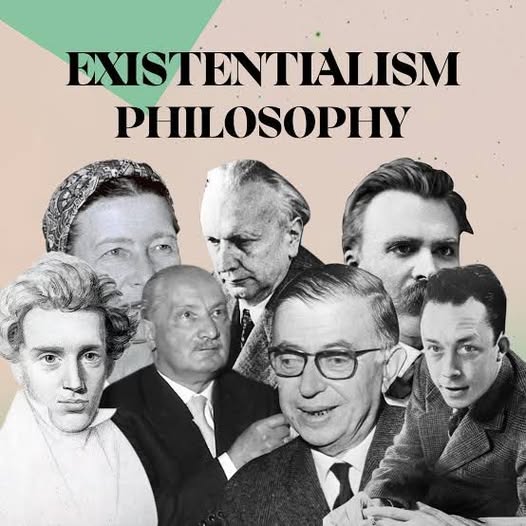
The deeper question is how individuality can be recovered without dissolving collective responsibility. This is where phenomenology and existentialism become unexpectedly relevant. Phenomenology begins from the recognition that reality is first encountered through lived experience, not inherited doctrine. It does not reject tradition, but it refuses to treat it as self-validating. By suspending inherited assumptions long enough to see clearly, phenomenology restores legitimacy to individual perception and judgment. This shift is not an invitation to egoism. It is a discipline of attentiveness.
Before acting for the collective, one must first see the situation as it actually presents itself. Judgment becomes contextual rather than mechanical. Responsibility deepens rather than dissolves. Existentialism radicalizes this insight by insisting that freedom is inescapable. Jean-Paul Sartre’s assertion that “man is condemned to be free” does not celebrate liberty as indulgence; it names freedom as burden. One cannot evade responsibility by appealing to tradition, role, or obedience. Every action is owned fully by the individual who performs it. Existentialism does not license selfishness. It places a heavier ethical demand on the individual than most traditional moral systems. In choosing for oneself, one simultaneously affirms a vision of what a human being ought to be. Every choice contributes to shaping the moral world others must inhabit.
This framework aligns more closely with a warrior ethic than is often acknowledged. Courage without certainty, action without guarantees, and accountability without refuge have always been the central virtue of Rajputs.
Existentialism simply relocates these virtues from the battlefield to the domain of life choices, creativity, and thought. The existential individual does not abandon the collective. What is abandoned is moral evasion-the habit of hiding behind inherited structures to avoid personal responsibility. It is crucial to distinguish this from Western atomism. Existential individualism does not isolate the self from society. It binds freedom to responsibility and creativity to consequence. Individual excellence becomes a moral act, not a private indulgence. Innovation becomes a form of service. This requires a shift from role-based identity to vocation-based identity. In the older framework, honor derived from fulfilling an assigned function. In the newer framework, honor emerges from authentic excellence. Artists, scientists, entrepreneurs, and thinkers become modern carriers of Kshatriya responsibility—not through inheritance, but through contribution.
Collective well-being must therefore be reimagined. Earlier models prioritized survival through individual sacrifice. Contemporary conditions demand strength through individual flourishing. Creativity becomes cultural capital. Innovation becomes strategic power. A community that suppresses individuality stagnates; a community that ethically channels it adapts and endures. Freedom without responsibility leads to chaos. Responsibility without freedom leads to decay. Existential humanism binds the two. The modern Kshatriya does not merely defend territory. He expands possibility. Political power in the present age flows from cultural power, and cultural power flows from ideas. Ideas are born where individuals are free to think, create, and fail without existential fear. Phenomenology and existentialism offer a philosophical foundation for this freedom without severing ethical continuity. This is not a rejection of tradition. It is tradition becoming conscious of itself, and therefore capable of renewal.